Herb poultices
For a poultice, you process whole herbs into a paste for direct application to the body, and this can be used in skin complaints such as superficial burns, splinters, bruises and cuts. You will need to crush, chop or grate herbs into a pulp, and add just enough water to make a paste. You can add flour, clay, bran, honey, soap etc. to make the paste thicker. The paste is spread evenly on the skin up to 1-2 cm thick. Using muslin helps to hold the herb mixture in place, for a small area you can use an empty teabag, for a large area use a pillow case. Leave on for 30 min or longer and repeat as needed. It can be helpful to apply a thin layer of oil on the skin first. Larger amounts of herb paste can be made in a blender, and could also be made using dried herb moistened with water, though generally fresh herbs work best.
A compress is also applied direct to the skin but is usually based on a piece of cloth soaked in a herbal infusion or decoction. Here is a basic recipe for making a yarrow poultice, antiseptic and anti-inflammatory, good for applying to bruises, cuts, stings or rashes.
Recipe: Making a soothing yarrow poultice
You will need:
25-50 g fresh yarrow herb (a good handful of leaf)
Water
Pestle and mortar, muslin and scissors
1. Pick leaves and brush off insects and dirt.
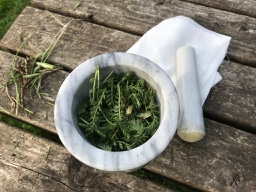
2. Chop or tear the herb coarsely, and place in the mortar.
3. Add a little water and crush and mash herbs into pulp or paste using the pestle.
4. Cut a piece of muslin about twice the area of skin to be treated, and spread the herb paste onto the layer of muslin. Fold over the muslin onto the herb, like a sandwich.
5. Apply the muslin with herb paste direct to the affected area, tie on with strips of muslin, leave on for 30 min and repeat as needed.
Yarrow poultice in pictures


Other herbs for poultices
This recipe can be adapted to use other fresh herbs. Suitable soothing herbs for use as a poultice include plantain (Plantago spp) especially for insect bites or stings, splinters, boils, also chickweed (Stellaria media) or lemon balm (Melissa officinalis). Antiseptic marigold (Calendula officinalis) flowers and leaves can be used for bruises, burns, cuts, sore and inflamed skin. Comfrey (Symphytum officinale) or St John’s wort (Hypericum perforatum) help in healing superficial wounds, repairing skin damage and recovery from bruises and sprains.
Make your own herbal remedies!
You can find out how to make a range of herbal remedies from the medicinal forest garden. Enrol for the Medicinal Forest Garden Harvest course online.
Start any time! The course includes videos, quizzes, practical tasks and information sheets. Cost is £45.00 and you have access to all of the course material for a full 12 months. More details…