Did trees provide ingredients for medicinal recipes in the past?
We think of trees in the festive season for bowls of nuts and decorative garlands, such as walnuts and holly. But in the past some of these items were important constituents of medicinal recipes, both printed and handwritten recipes.
Researching historical recipes
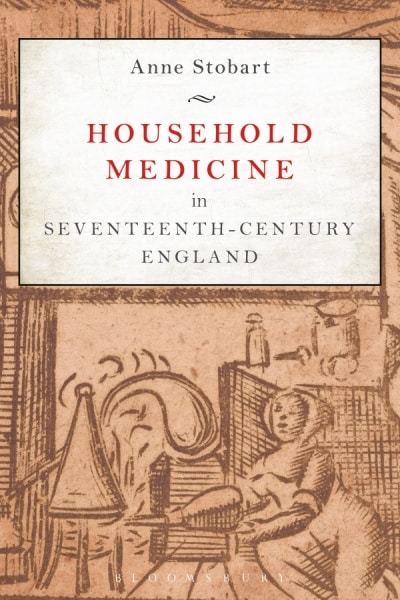
I have a database of over 6500 historical medicinal recipes and have used it to investigate whether trees and shrubs were used in these recipes. Some readers may know of my background in researching herbal history and domestic medicine. While I taught clinical herbal medicine at Middlesex University in London I carried out my PhD project researching household medicine in the seventeenth century. As the teaching post was part-time, I was able to explore archives in South-West England to collect the seventeenth-century historical recipes. And I looked for evidence for actual use of the medicinal recipes in letters, or whether purchase of ingredients could be seen in the household accounts. In 2016, my research findings were published in Household Medicine in Seventeenth-Century England (Bloomsbury Academic).
Herbals and medical recipes in print
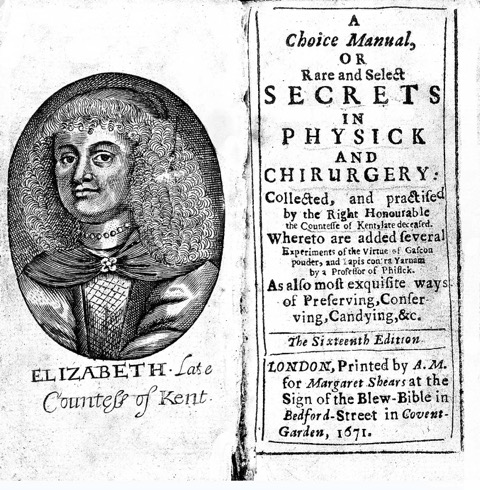
Herbals in the seventeenth-century period were very costly and medical advice often was only available in Latin, whether in prescriptions or in print. Hence the popularity of Nicholas Culpeper responsible for translating the official pharmacopoeia of the university-trained physicians, Pharmacopoeia Londinensis (1653). Also popular were collections of recipes which were published as books, and these were often attributed to ladies of high status, such as the Choice Manual of Elizabeth Grey, the Countess of Kent (1581-1651), also printed in 1653.
Trees used in historical printed recipes
Typical of the recipes in the Choice Manual printed collection is the recipe for the plague incorporating walnuts (usually imported) and ‘triacle’ or ‘treacle’ (an expensive apothecary preparation).
An excellent Receipt for the Plague
Take one pound of green Walnuts, half an ounce of Saffron, and half an ounce of London Triacle, beaten together in a morter, and with a little Carduus, or some such water, vapour it over the fire, till it come to an Electuary: keep this in a pot, and take as much as a Walnut, it is good to cure a Fever, Plague, and any infection. (p.9, Choice Manual)
You can see more about the tree species in recipes in the Choice Manual in a blog post that I wrote for the Recipes Project ‘Take the sprigs of oak trees’: Medicinal recipes and tree ingredients (2016).


Simples and recipes
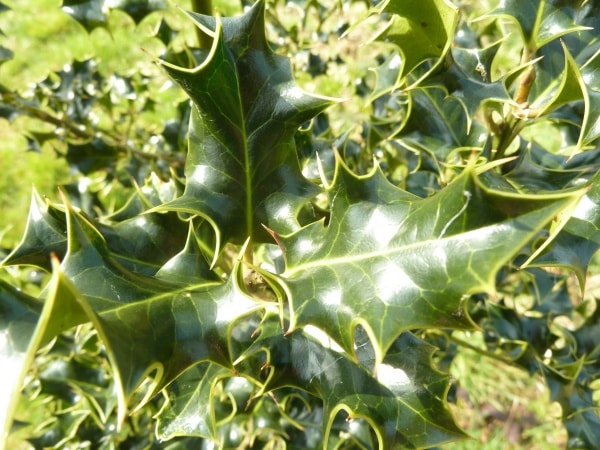
There were some recipes in the Choice Manual which were based on local native tree species, often used as simples, with one main ingredient, such as holly leaves in a recipe for a canker (a sore or ulcer).
For the Canker in the Mouth or Nose
Take the ashes of green leaves of Holly, with half so much of the burnt pouder of Allum, blow with a quill into the place greived, and it will help Man, or Child, or Beast. (p.153), Choice Manual)
Exotic and introduced ingredients in recipes
I looked at the historical recipe ingredients in my database more closely to explore the relative frequency of native or introduced tree items. Like the printed Choice Manual, the household recipe collections also included a mixture of ingredient sources. Just under 10% of the recipes included tree or shrub items from a range of 73 woody species, varying from bark to leaves, flowers, nuts, seeds. Some ingredients were extracts using tree products such as almond oil or spirit of juniper, and many of these ingredients probably required a purchase. But more than half of the tree-based ingredients were not native to England – they were imported from warmer tropical or New World sources, such as fruits (apricot, pineapple), nuts (almonds), oil (olive), resins (frankincense, myrrh), spices (cardamom, cinnamon, clove, nutmeg), and others (cinchona, sarsaparilla, sassafras). While a few wealthy households might have developed facilities for hothouse growing of fruits, most of these items were likely to have been obtained at the grocer or apothecary.
Native trees in early modern recipes
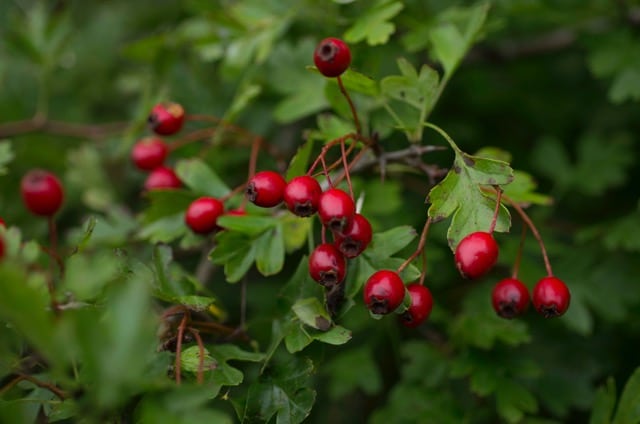
So was the use of native trees evident in handwritten household recipes? I found 934 examples of tree-based recipe ingredients in household recipes that might have been grown or harvested. Some were likely to be readily grown in the domestic context for culinary or fruit reasons (such as apple, bay, cherry, damson, pear, plum, walnut). The most popular tree or shrub names that could have been cultivated or wild-harvested were ash (61 occurences), elder (166), hawthorn (31), juniper (65) and oak (65). Despite having much evidence of a folklore tradition, the birch and holly featured infrequently in the recipes.
Household gardening and foraging
Just because some woody plants and trees were included in the household recipes does not necessarily mean that they were actively sought out. In my research it was hard to discover examples of evidence of gardening or foraging for medicinal plant ingredients. Records of these activities are difficult to locate, especially where women were involved as they were often not recorded by name, even when purchases were made (unlike physicians and apothecaries who were usually named). There was one exception, and in my book on household medicine I looked at the activities of Margaret Boscawen, wife of an MP in Cornwall, and her notebooks. She showed a keen interest in medicinal plants and made lists of plants to seek out and collect. More about her can be found in my book Household medicine in seventeenth-century England. Hopefully there are more scholarly researchers out there who can publish examples of early modern plant sourcing!
References
Culpeper N (1653) Pharmacopoeia Londinensis: Or the London dispensatory. London: Peter Cole.
Grey E (1653) A choice manuall of rare and select secrets in physick and chirurgery. London: R. Norton.
Stobart A (2016) Household medicine in seventeenth-century England. London: Bloomsbury Academic. (check out the publisher Bloomsbury Academic for 30% off at time of writing this blog!)