This post has been updated in July 2026 in the Medicinal Tree Woman newsletter on Substack. You can see the updated post here…
A community green
Sandford Millennium Green is a community green in Devon UK. This site began to be established back in 2000, originally it was a 12-acre field just south of the village of Sandford. Then it was a meadow of grass with streams running through and alongside. Bids to the National Lottery and elsewhere were successful in gaining funds. Since then the area has been developed as a community resource. It offers plenty of green space, walks, a community orchard, flower meadow, pond and wildlife haven, and more. There are regular Sunday opportunities to get involved from helping to harvest the apples in autumn to maintenance of the footpath leading to nearby Crediton. At the northern end of the Green close to the village there is a Herb and Forest Garden area which became overgrown in more recent years. Over the last two years I have been involved in restoring and updating the Herb and Forest Garden.
Learning about culinary and useful herbs
The circular Herb Garden is based on a pattern of paths and beds lined with brick, and a central raised brick bed. In the beds are a range of interesting herbs from annuals to perennials. Some can be harvested for culinary uses such as mint and oregano. Others can be cut and dried for making herbal teas. We have started to add plant labels to help visitors in identification of some key plants. Our aim is to encourage people to learn to identify and safely harvest these herbs.
Planting a forest garden
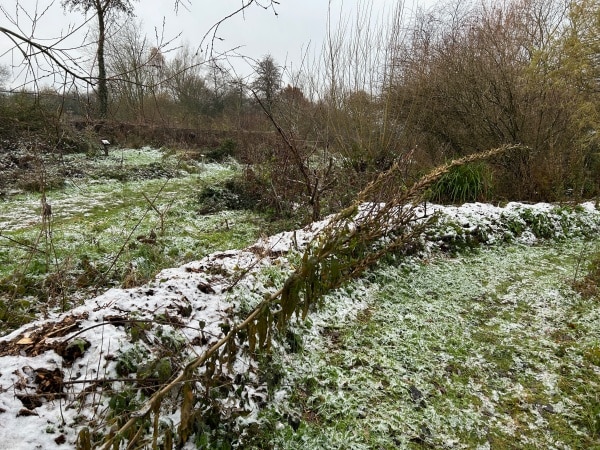
The Forest Garden was originally designed with a variety of trees and shrubs including both native and introduced species. The range of plants was based on a permaculture design incorporating layers from herbs to shrubs and trees, making the most of the light available. I was involved with the initial design which included medicinal trees and shrubs. The Forest Garden can provide useful remedies for common complaints such as comfrey leaf, cramp bark, elderflowers and willow bark as well as other benefits of fruits and nuts. BUT PLEASE NOTE that if you are on prescription medication we recommend consulting a qualified herbal practitioner for advice on suitable herbs. Visitors can explore the winding paths around the Forest Garden, a great opportunity for forest bathing!


Biodiversity is key
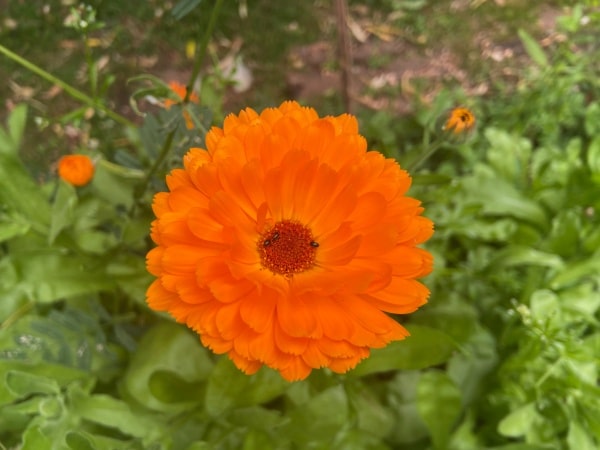
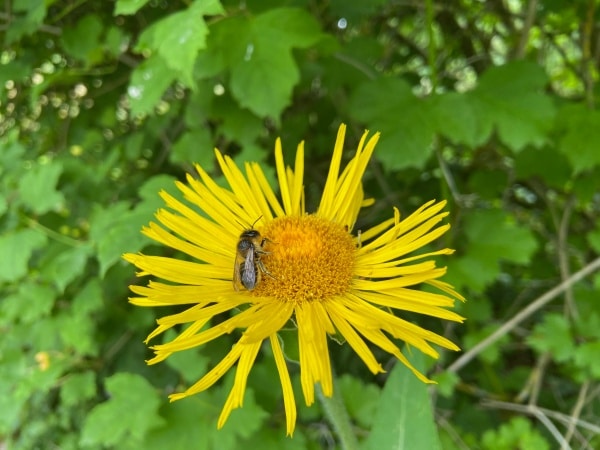
In addition to culinary and medicinal uses there are also other useful plants including native plants to support insects and pollinators like bees as well as providing seeds for birds. There are plenty of plants appearing naturally and we have added more by our planting in the Herb and Forest Garden. We can also harvest seed for subsequent years. The trees and shrubs include birch, buckthorn (alder and purging), cornelian cherry, elder, guelder rose, hazel, hawthorn, juniper, lime, oak, plum (Langley Bullace), quince (flowering), willow (purple, violet and white), witch hazel, yew. And there are lots of smaller plants and climbers including borage, bramble, chicory, chives, comfrey (2 kinds), dock, elecampane, evening primrose, fennel, feverfew, gypsywort, hyssop, ivy, Jacob’s ladder, knapweed, ladies mantle, lemon balm, mallow, marigold, marjoram, meadowsweet, mint (4 kinds), mullein, nettle, oregano, primrose, purple loosestrife, saint John’s wort, salsify, sorrel, southernwood, tansy, yarrow.
Renovation and new developments
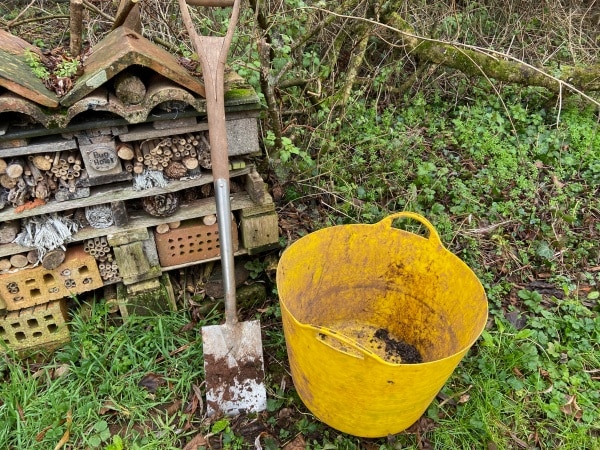
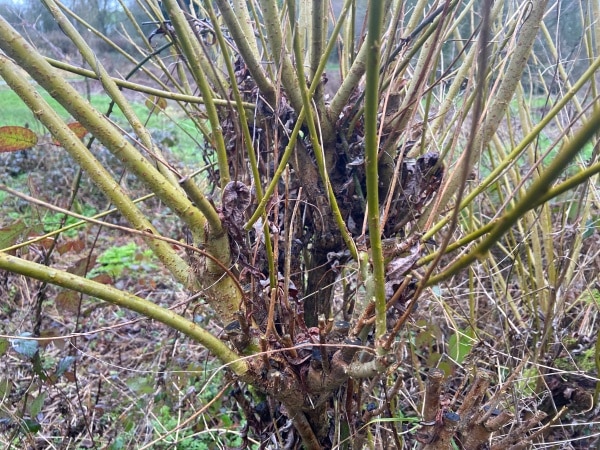
Since the establishment of the Herb and Forest Garden some trees have become overgrown and so we have had to think about management through pruning and other means. Regular coppicing or pollarding is one way to keep vigorous plants in check, such as the guelder rose and willow. Cut logs are piled up for a year or two and then can be reused to make path edges. A few other plants are invasive and tend to smother less vigorous neighbours, so our management approach is to dig out or cut these down before flowering, aiming to exhaust the roots and prevent further seed dispersal. Alongside the clearance of parts of the site we have been able to add some new features to extend the range of possible planting areas. These include a herb bank raised above a boggy area and a woodland walk.
Maintenance of the Herb and Forest Garden
Volunteers from the local area help by getting together for a morning a month to maintain the Herb and Forest Garden. We regularly keep the grassy paths cut, clear the herb bed edges, and remove overgrown or invasive plants. And we usually harvest some plants and have a couple of projects under way. Our aim has been to extend the diversity of planting in a sustainable way so that there is long-term management in place. You can see more in a short 8-minute video about the Herb and Forest Garden at Sandford Millennium Green. The video summarises activity over the last two years and some future plans, here….
Finding Sandford Millennium Green
The Green is open to the public. It is on the southern edge of the village of Sandford in Devon on the road towards Crediton, OS map reference: SS 8289 0212.
By car: There is a small layby for car parking. Park and go through the wooden gate into the Millennium Green and turn right. Follow this path towards Sandford village and look for the Herb and Forest Garden entrance path on your left.
By bus: Bus number 369 from Exeter Bus Station to Sandford goes past the Millennium Green, approximately 30 min journey.
On foot: Stagecoach number 5 buses run frequently from Exeter to Crediton. There is a well-kept footpath from Higher Road in Crediton to the Millennium Green, about 35 min walk.
Sandford Millennium Green are on Facebook, more…