Why herb-infused oils?
Forest gardens are ideal sources of many aromatic plants, and their buds, leaves, flowers can all be readily infused in carrier oils. These oils not only help to keep skin soft and supple but may also be antiseptic, antifungal and anti-inflammatory. There are many conditions that could benefit, ranging from dry or damaged skin to sore muscles and arthritic joints. Here I am writing about infusing carrier oils and we should distinguish these from essential oils. Carrier oils are produced by pressing the fruits, nuts, seeds of plants, and are widely used as emollients for moisturising skin or massage. Essential oils are produced by steam distillation and are very concentrated extracts and generally not suitable for direct use on the skin. Being able to infuse plant material in a carrier oil, you can have an alternative and gentler way to gain the benefits of plants.
Marigold flower infused oil
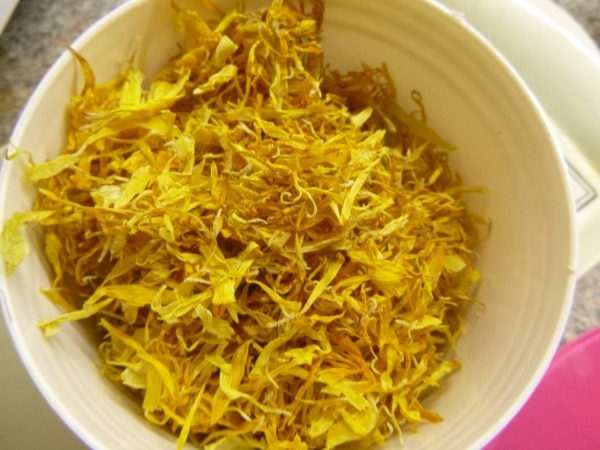
A good basic approach is knowing how to make marigold flower infused oil. Many people are familiar with the bright orange flowers of Calendula officinalis, the English marigold. This plant readily grows in a sunny spot and can produce flowers over a long season, indeed, it will soon go to seed if the flowers are not regularly harvested. The whole plant has a resinous smell and it is rich in volatile oils and carotenoids. An infused oil can be readily made with the dried flowers of marigold. The flowers can be picked on a weekly basis and laid out to dry in an airy space. Then fill a jar with them (you can use the whole flowers or just the petals) and cover with an oil such as sunflower oil. Make sure the flowers remain submerged by using a weight or smaller jar to press them down, otherwise they tend to blacken and spoil. Cover with muslin or kitchen towel held in place by an elastic band. Leave on a sunny windowsill for 3-4 weeks and then strain, bottle and label. Use this golden oil for sore nipples and other skin lesions. Caution as the oil should not be used on an open wound. This process of infusing oil can be carried out with other plants including flowers or parts such as buds and leaves.
Aromatic plants
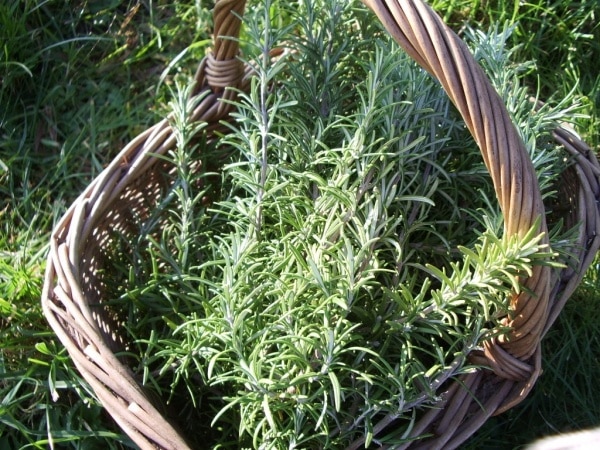
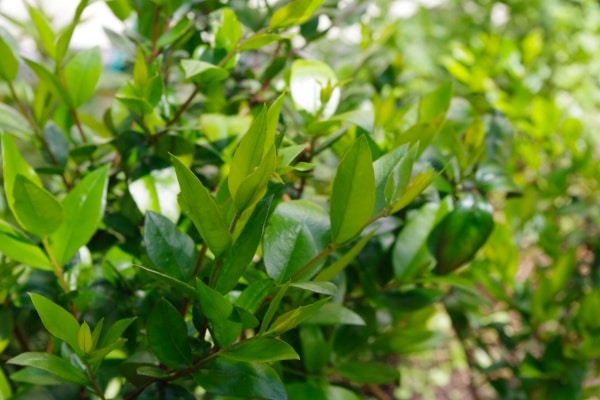
There are plenty more aromatic plants that do well in the forest garden, especially trees and shrubs. Infused birch leaf oil can be used for treating sore joints and muscles. Eucalyptus leaves provide an antiseptic oil for a chest rub for coughs and colds. Rosemary leaf oil is also good for circulation and has a reputation of encouraging hair to grow! Consider myrtle leaves too for an antiseptic and anti-inflammatory oil that can be used in making an ointment for haemorrhoids. Conifers offer a particularly rich source of aromatic constituents – such as pine and juniper – and they can be harvested all year round.



Making products such as balms
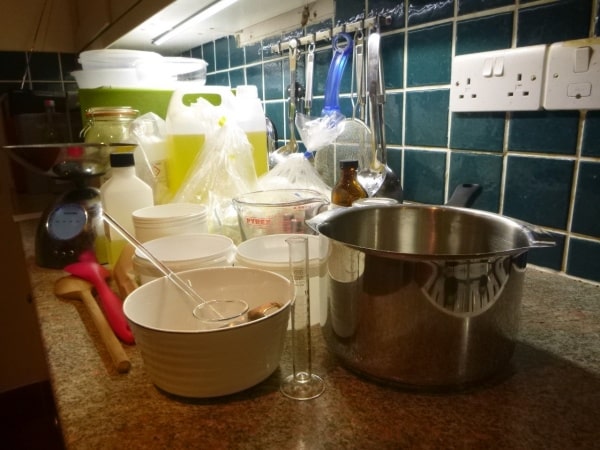
Once you have an infused herb oil then it can be the basis for making a more solid balm that can be applied to the skin. This is done by adding butters and waxes and warming to mix all together. Here is a recipe for Birch Bud and Sweet Bay Leaf Balm (taken from The Medicinal Forest Garden Handbook).
Birch Bud and Sweet Bay Leaf Balm
20 g dried birch buds
20 g dried sweet bay leaves crumbled
200 ml sunflower oil
80 g shea butter
20 g beeswax
A bain marie or double saucepan,
muslin, 8-10 small jars for storage
- Place the buds and leaves in the oil in the top of a bain marie, or in a pan over another pan of water, and gently warm for 60 minutes.
- Add the shea butter, stirring to dissolve as it melts.
- Grate the beeswax and stir into the oil and bud and leaves mixture.
- Remove from the heat and strain the oil through a muslin cloth into a warmed jug, discard the used buds and leaves to compost.
- Pour the oil into small jars, cover and allow to cool and label, keeps for 1-2 months. Good on dry skin and as a lip balm.
What are the best carrier oils?
Purpose is important when choosing carrier oils to infuse. While you might prefer an organic oil, bear in mind that organic oils may degrade more readily than processed oils. This means that the keeping qualities may be affected as the oil oxidises and goes ‘off’. You can source good carrier oils from aromatherapy suppliers and they will often offer both organic and non-organic alternatives. Sunflower or sweet almond oils are good all-rounders with reliable keeping qualities. Grapeseed oil is fine and light – useful for massage – whereas heavier oils such as olive or hazelnut may be more moisturising and repairing for damaged skin. Some seed oils such as rosehip are very rich in nutrients such as unsaturated fatty acids that can help skin regenerate and reduce scar tissue.
Safety considerations
Herb-infused oils can last for 3-6 months, especially if kept in dark glass bottles or in the refrigerator. Perhaps the most important point to remember is that moisture is a problem in many bodycare products. This is why it makes sense to dry plant material before it is used to infuse a carrier oil. If you plan to sell your products then you will probably need to add an anti-oxidant such as vitamin E or rosemary extract. Remedies that include water must always have some added preservative, even those for external use only. The formulae used for bodycare preparations and cosmetics should be safety assessed and some suppliers of bodycare ingredients can help with training on the relevant regulations and what should be included on product labels.
More information on herb oils
You can find out more about infusing herb oils from my recent talk during the Great Big Green Week in autumn 2022. I offered an online Zoom session all about infusing herb oils. ‘Herb Oils From the Medicinal Forest Garden’, the one-hour recording of the presentation is now available online with subtitles on YouTube. It includes more detail on plants, equipment, pressing homegrown oil, preservatives, products, safety and marketing.